Friday, 21 October 2016
Qs you should be able to answer

Wednesday, 12 October 2016
ill or sick?
Saturday, 30 March 2013
I`m not scared
At that time and very pretty and fair singer called my attention. The song sounded rather mysterious and exotic and they rhythm was very sticky. I headed for El Corte Inglés - I would walk a few miles from my house - and buy my 900 pesetas long play.
"I'm not scared" has been one of my favourite songs ever since. As I could read on Wikipedia, the song was orginally written and composed by Pet Shop Boys, who later recorded their own cover version. It contains a couple of lines in French and in fact, the song became so popular in the rest of Europe that it has got its own version in French.
I wanted to use this song in class for these reasons: to begin with, becuase I like it a lot, the language it uses is rather simple and of course, it brings back memories of my past.
The vocabulary is easy. Grammar is a bit more difficult here: you have to bear in mind a couple of conditional tenses and structures. I like the use of the verb snap, which here means: "chase people trying to bite them".
I understand the song tells the story of a couple. The girl loves the guy but he is a liar. There is some hidden story behind the man: he is a spy or something. The girl does not know why he behaves this way, but she seems to accept anything except for the dogs trying to bite her.
Here are the video, the original song and the Pet Shop Boys´ version as well as a link to the its lyrics.
Wednesday, 13 February 2013
My Rosetta Stone
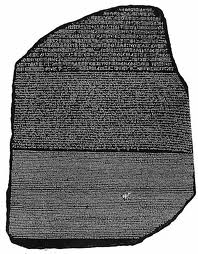
On Saturdays and Sundays I learn some German. At the weekend I also make my German homework. I meet my friends on Wednesdays. In the afternoon I play with my computer or I watch TV. To end up with, I usually go to bedat ten o'clock.
Any resemblance to real persons, living or dead, is purely coincidental.
Monday, 24 December 2012
British Car Plates
- What I'll call a geographical locator: The first section of letters tell you where the car is from.
- A date locator: if card get their plate between March and August, they just write the last two digits of the year, but it the plate is made between September and February, they get the same figure, plus 50 - don't ask me why -
- And last but not least, they write a set of three random sequence of letters. they don't include letters I, Q or Z.
- You know when a car was made.
- In case of crime involvement, witnesses usually remember the area code.
- They have enough new codes until 2051 while the Spanish system can only cover until 2025. - but only if we are still buying cars by that time. -
Tuesday, 13 November 2012
Power Distance
I had never thought of it, but once you twig the idea, you feel better with yourself as a teacher. When I was younger, it would have been impossible to shout in class or talk to other students when our teachers were speaking. In other words, the teachers were the authority in class. If they decided so, they would not repeat their explanations and they would not tell us how they made out their assessment calculations. We were invited to leave the classroom - sometimes forever - if our teachers decided we were misbehaving.
This is nolonger true: teenagers decide now what they eat at home; they have their own properties - mobile phones, video games, etc. - and they argue with their parents if they disagree with their opinions. Of course this is also happening during lesson periods. Our students tell us aloud if we say or write something wrong in class, they want to check their exams and they ask us how we made our assessment calculation - even if they aren't right at all - . Thus, we could state that Spanish people are getting used to freedom. The problem is parents still demand the same explanations as their sons as daughters: they both, parents and their siblings want to have meetings with teachers to make decisions about teachers' work. Needless to say that they always want to have positive marks at the end of each term - it doesn't matter if they worked hard or not -.
Due to our education, we tend to be as flexible as we can, but you see, the supervising process we are going under is making the whole stuff really difficult.
No more complaints this time. Thanks to Speak Up magazine for the nice article at number 327.
Thursday, 24 May 2012
Robotics Laws
2. A robot must obey orders given it by a human beings except where such orders conflict with the First Law.
3. A robot must protect its own existance as long as such protection does not conflict with the First or Second Law.
Thursday, 5 April 2012
A small, good thing
There is no room for imagination in the story, except for the doctor's explanations about the actual situation of his patient; there is no space for anything different from realism either. Every situation shows as it is; as though every scene had been recorded with a camera.
In my opinion, the story is no more than raw criticism against materialistic society and the narrow views of consumerism. The baker, for example, may endlessly go on and on, day after day making his muffins and cakes, but he would not care about anything else except for his money.
Whatever it is, please have a look at Mr. Carver's biography. It is as interesting as his own literature. If you have the chance, please read this short story.
Oh Joseph, I'm so tired
I wondered if he would remember me and I inquired in the most rude manner I could have imagined. I stared at him and immediately after that, he seemed to have a vague memory of myself. We greeted each other even thugh he could scarcely identify me with one of his former studets. I acknowledged how much I admired him at that time and told him I still kept a copy of each, his grammar and idioms books - the latter of which I probably acquired in a second hand book shop - and he made a few questions to me. As soon as he knew I was teaching, he stated we were colleagues, the mere fact of his declaring this, made me feel uncomfortable and ashamed as it is long ago that I knew I would never be as wise or intelligent as my teachers were.
The reason why I said books choose people is because the dramatic line within the book portraits a critical period of American History which resembles the one we are living in Europe now. The poor or middle class NY society of the early 1930s become an excellent background to tell us the story of a divorced mother and her two children and how their struggle for the Amerian dream ends up in deep frustration.
Apparently, the younger brother, who is seven years old when the story is happening, becomes the omniscient narrator when he grows old. The whole story turns around an anecdote happening to their mother, who at that time was appointed by President Roosvelt's office to make an sculpture of his head.
False and great expectations about the future, poverty and mediocrity, lack of means and money, hypocrisy and sour criticism to Amerian way of life are the main topics in the story. So, you could discribe this fine piece of writing as realistic as you feel all these places and characters really existing. The author really describes every feature in the characters' personalities and every single spot in this narrow geography of him, which in spite of this, makes you feel as though you could visit every room or call on every person or house he talks about.
I'll stop here for fear that I might write longer than I should. It is only about 60 pages long and it is worth spending one or two afternoons reading it. Hope you enjoy if you happen to come across a copy of the story. It was my pleasure to find my former teacher anyway.
Thursday, 2 February 2012
Living Abroad
However, not everything about living abroad is peaches and cream. Firstly, you mjust learn the language, because if you can't still speak the language, you won't be able to communicate to other people. Also you'll have to find a job to live on, and a house to live in. Secondly, you leave your family and friends in your country, something that is very sad... Finally, you aren't sure if everything will be okay in your new house, and this must make you think you do realy want to move.
In my opinions, there are enough arguments for living abroad. If I could, I'd like to try it, but diasadvantages keep me off from thinking about it. Anyway, I know that If I could, I wouldn't go alone; I'd like to take some of my friends with me!
by Antonio
Thursday, 29 December 2011
Great Expectations
I found a couple interesting vocabulary topics in the book: Some misleading verbs like realize and notice and the difference between the verbs Lay, lie, lie. You can also have some extra preactise in these two links: link 1 and link 2.
I hope that all my students have a great time reading the book with me. We will be listening to the the CD version enclosed chapter by chapter and they will be delivering a project and probably taking an exam. I will comment about the results when we have finished.
Sunday, 4 December 2011
Changing Places
Some other characters like Charles Boon, a radio station host who was formerly one of Swallow's students or Wily Smith, a civil rights activist and well known rioter, make the humorous point in the story.
At some point each of them get to know people who were previously on their respective social circles. They even have sexual relations with each other's couples or daughters (Swallow sleeps with Melanie, Zapp's daughter).
The book is divided into six sections: The first one tells us about their experiences as they both fly to their destinations. The second section describes in detail the people and places they know. The third section is made of letters that each character sends or receives from people (mostly family). The fourth section is made out of newspapers articles in which they are represented one way or the other. The fifth section talks about their decision (or not) to go back home, and to end up with, in the last section, they decide how and when they are coming back home...(or not).
The places and timing are also central to the story: civil rights, the hippy movement, Vietnam war protesters, twentieth Century modern industrial societies (previous to ICT technologies) are clear examples for this. Academic life in particular is also analized in detail all through the book.
Fifteen or seventeen years later, I really had a good time reading this book. It has also given me the opportunity to watch Mr. Lodge in several videos in Internet. I hope not to have ruined anyone's reading.
Tuesday, 29 November 2011
Rick Astley
If I ask any of my teenage students who he is, I swear none of them would know. My father always said that music is never out of fashion. I didn' belive him. When I was sixteen, it was a matter of life or death to know Rick Astley's song lyrics off by heart.
To switch to the topic I wanted to talk about from the beginning of this post, when I bring songs to class. I mean, when I'm back to future and get an MP3 copy of my favourite songs and read the lyrics with them (once I have previously found them in Internet), they stare at me as though they did not know what I am talking about. I have to make a very thorough and extensive introduction if I want to play something by The Police or Genesis. Not so If I'm dealing with Madonna or Michael Jackson (R.I.P.) as, one reason or the other, they are still on newspares headlines, TV shows or the Internet.
We all know, or we reach this conclusion as we grow older, that music is a business as any other. It has its own advertising process and music producers look for a target audience. All in all, song themes, situations, places and words are endlessly
repeated by different artists at different times.
I think the right thing to do is a combination of both: old (did I say old?) songs as they are part of our western culture and history and brand new songs by Lady Gaga, Rihanna, Beyoncé, Britney Spears, Jessie J or Adele (Wow, they are all women!). I confess it's going to be hard to forget about pieces of paper with gaps or errors on them; the typical hand out you keep in a filthy cardboard folder and switch to computers as (to begin with) we'll be contributing to save the environment.
I hope I'll be still alive in ten years from now. What will my students think of my favourite songs? They'll probably think to themselves: "Where's this man come out from? His music is ancient!" I'll be making history and,.....What about MP3 players? Will they still be of any use? At least I hope I can keep my blog or otherwise, I am wasting my time.
I have a little surprise for you. Here is an exercises to practice your English.

Thursday, 1 September 2011
Defender of the Faith
As Marcus Cunliffe points out in his Literature of the United States: "In the early twentieth century the general or WASP tradition did appear to control the nation's cultural life", but later, in the same chapter he states: "By the 1950s Jewishness became a big theme in American culture. Gentile prejudice was one sub-topic. Jewish self-dislike, real or alleged was also analysed".
So, the subject matter of this story in particular is Jewishness and the relationship between Jewish soldiers and the army during II World War. Hypocritical religious convictions are under analysis as well as disicipline and social relations within the army. From the psychological point of view, rank status and shared religious feelings are an excellent excuse to launch a personal struggle between segeant Marx and private Sheldon, who plays the guilt trip on the former and tries to bring him round on doing what he wants.
If we explain some of the story plot, the comments above made will be better understood: Just before the end of II WW, sergeant Marx is sent to a traning camp in Missouri. Once there, he meets private Sheldon. They are both Jewish and Sheldon tries to take advantage of this situation to get special favours or even confidential information. Emotional blackmail is Sheldon's main strategy and, even though Marx is an experienced soldier, he ends up doing what Sheldon wishes.
The story follows a very straightforward chronological order; from May 1945 and covers - approximately - three months afterwards. The story is written in the first person singular and sergeant Marx is both narrator and main character. From the beginning, the reader gets the impression that he/she is in front of a personal diary, except because there are many dialogical structures. The action is a mixture of personal thoughts and reflections as well as a set of dialogues in military settings: the chow line, the headquarter's office, the parade yard or the shooting or range line.
Even though we are in a military context, the language used is quite informal, full of idioms, phrasal verbs and ordinary people's language.
In my opinion, the author is trying to show the conflict between religious duties and patriotic feelings; the clash between self-indulgence and sacrifice. In other words, he is denouncing the attitude of some American people towards the war in Europe.
There is another topic I think is worth making a comment on: the author makes is quite clear that even in a free democratical society, politicians take advantage of certain situations in order to get electoral profit. The letter that Sheldon writes to a congressman and its consequences are a clear example of that.
The reading of this story was interesting. It makes the reader think about different cultures and religions, world social and political order and the power of words.
Sunday, 21 August 2011
The Courter
Wednesday, 3 August 2011
The rich boy & The curious case of Benjamin Button
That was not the case; I found it hard to read those two Fitzgerald's stories, I think due to the amount of vocabulary he uses - sometimes only suitable for the time and places he is talking about - and mostly because of the American cultural conventions he constantly and deliberately falls back on.

In my opinion, the story is a narrative experiment that provides the author with the opportunity to set up humorous situations and play with the hypothetical situation of an human being living backwards in time.
Benjamin Button's story is similar to Poncela's "Cuatro corazones con freno y marcha atrás". Let's not forget that both authors worked as Hollywood script writers for some time.
The rich boy mirrors the main topic in The Great Gatsby. Central to the story is its main character, who as a young man, runs a dissipated, lazy and - at some point - immoral life. He fails in settling down his own life and misses the opportinity of getting married a worthy woman. Later, in a very selfish and arrogant manner, he thinks of himself as capable of giving advice to others. In the end, he feels all alone; forgotten by all his friends and relatives. In spite of his failures, he insists in behaving the same way he used to.
 The rich boy is also interesting from the historical point of view as we become priviledged observers of the very rich NY society; those belonging to the very reduced set of people who became rich before the 1860s.
I had the impression that the author himself gets involved in the story as he identifies as a close friend of the main character. Everything is then, told in the third person narrative style.
I strongly recommend you to read some of Fitzgeral's Literature, but be prepared to use your dictionary and your wikipaedia quite a lot.
Tuesday, 26 July 2011
To room 19
When you start reading it, you come accross a young, wealthy and well established couple, who own a big house and have four children. Apparently, everything should be all right, but the wife feels all alone and desperate. She had to do without her professional life and that - among other reasons - makes her feel down.
As the author goes deeper into the main character's psychological status, we discover that she really needs to have her own private time and space. Eventually, she decides to rent a room in a dingy hotel in London, where she spends a few hours each day.
Whatever happens next, you have to read by yourself.
The author of the story is Doris Lessing. She got the Nobel Prize not long ago.
Monday, 25 July 2011
Recitatif
A few years have passed since then and early in July, I decided I had to take up some more reading in English just to catch up with the years I had spent reading only very easy samples of English taken from grammar books or English learning methods.
Even though I have to devote most of my time to keep an eye on my child, we drove together to a nice book shop in town and I came accross a new collection of short stories that include translations of the hard words at the bottom of the page. In a nutshell, I was determined to read some good stuff and my choice was Recitatif.
It is a sweet story about two women who spend a period of time together in a shelter when they were children. They do not meet each other for years and they have five different encounters as time goes by. The author tries to show how racial, social and psychological changes play a particular role in people's lives and how they understand and interpret their own recollections of the past the their relationship with others.
There's not much much more I would like to say about the story, I just want to recommend people to read it. Follow this link if you really want to go deeper into it.
Friday, 27 May 2011
Computers Today

In the past, people used to switch on their computers to look for information; mainly specialized websites or wikipedia. Now, we are facing a new situation; the Internet's consumer profile is different. People still look up their emails, but they have other means of personal information exchange: Facebook, Twiter, Tuenti..., as well as knowledge and information sharing sites such as Delicious, Blogger or Wordpress. In other words, what we call web 2.0 consists of an active participation of internauts in an infinite number of live and endless conversations, rather than simply seeking for information.
In average terms. How much time do you think people waste aswering stupid massages without a profit? Not to mention the amount of time we lose while our computers or laptops are switched on and off and they eventually start being operative. What about smuggling, illegal actions such as minors abuse on the web, credit card theft, etc? Well..., that's the bad thing about computers, I think.
But what would I do without looking up at my emails on daily basis? Probably read a fairy tale to my son.
4ºF